
Floor Plans for Renovation Projects
Before demo day, you need to know exactly what you're working with. GRAB scans the building as it exists — walls, openings, ceiling heights, and all — so your renovation starts from reliable documentation. Most projects deliver in 1–2 days. Larger buildings may take up to 5.
Why renovation projects need accurate floor plans
Most renovation projects run into the same problem: the building doesn't match what anyone thought. Walls aren't square. Rooms are slightly different sizes than the original drawings show. That wall you planned to move? It's bearing. Discovering these things during construction — not before — is where projects go over budget and behind schedule.
Starting a renovation with accurate, LiDAR-based floor plans gives your contractor and designer a reliable foundation. Dimensions are based on what the building actually is, not approximations from a tape measure or decades-old drawings.
How we create renovation floor plans
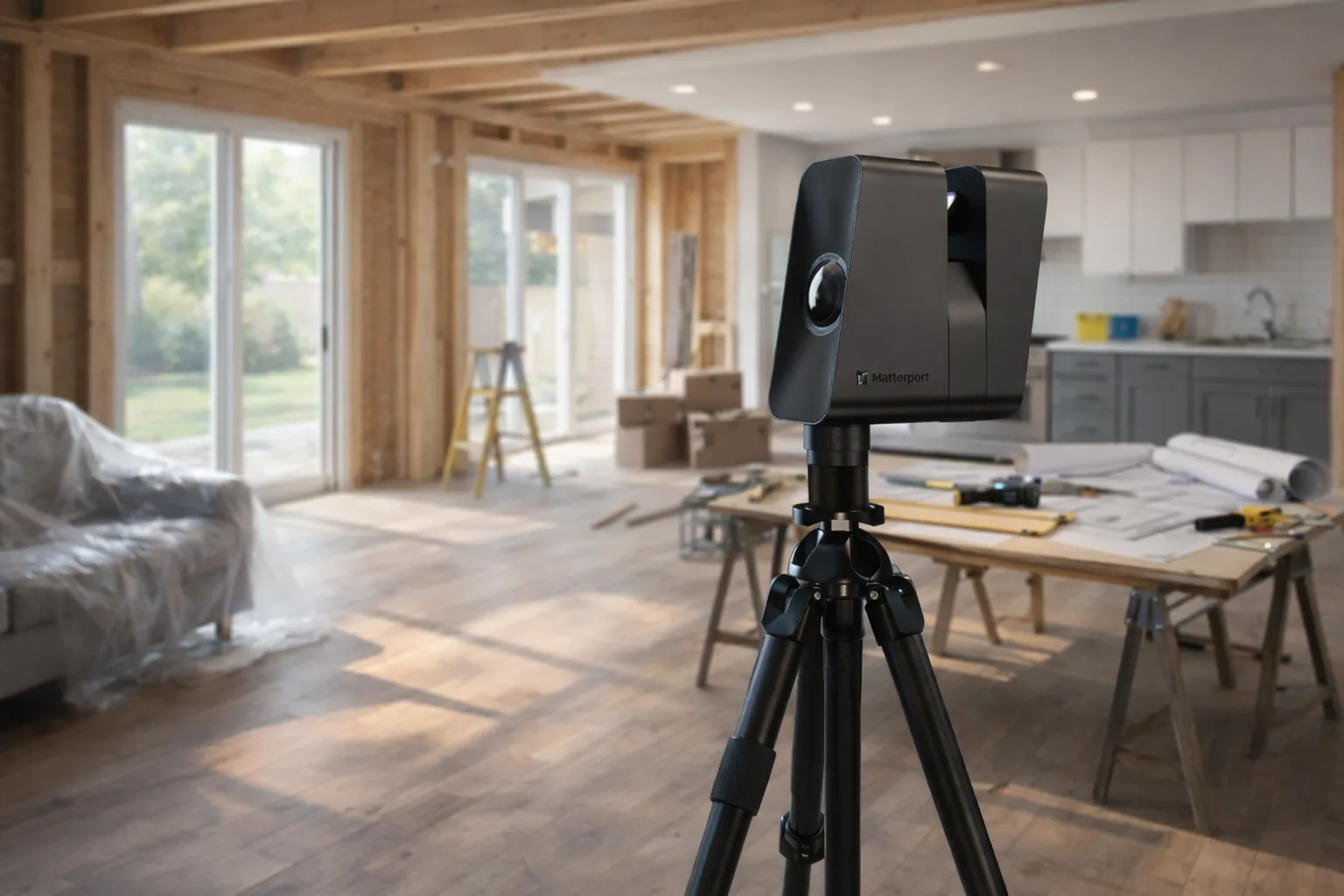
We visit your site with a Matterport Pro3 LiDAR scanner and capture the building geometry in a single visit. The scanner records the spatial data of every room, wall, opening, and ceiling — creating a detailed point cloud of the existing conditions.
Our drafting team then works from that scan data to create clean, dimensioned floor plans in the format your project needs. This isn't automated — our drafting team reviews the scan and produces construction-grade documentation. Most projects deliver in 1–2 days. Larger buildings or complex deliverables may take up to 5.
Who uses renovation floor plans
Remodeling contractors use them to plan scope, write accurate bids, and coordinate subcontractors before demo begins. Architects and designers use them as the starting point for renovation design — reliable existing conditions means fewer surprises during construction documents. Homeowners planning major renovations use them to understand what they have before engaging a designer.
What you get
- Dimensioned floor plans for each level
- Wall locations and thicknesses
- Door and window openings
- Ceiling heights per room
- Structural column and beam locations (where visible)
- PDF, Autodesk AutoCAD DWG, Autodesk Revit RVT, or SketchUp SKP
Common renovation applications
- Whole-house remodel planning
- Kitchen and bathroom renovations
- Addition design — need existing first
- Historic home documentation
- Layout reconfiguration
- Permit application support
- Pre-purchase documentation
Turnaround
- Site visit: 1–2 hours on site
- Up to 2,500 sf: 1–2 days
- Up to 5,000 sf: 1–3 days
- 5,000–10K+ sf: 3–5 days
Frequently Asked Questions
Do I need floor plans before starting a renovation?
For any significant renovation — whole-house remodel, addition, kitchen reconfiguration, or structural work — accurate existing floor plans are essential. They let your contractor and designer plan around what's actually there, not guesses that turn into field surprises.
How accurate are LiDAR-based renovation floor plans?
LiDAR scanning captures detailed building geometry in a single site visit. Our drafting technicians model that data into floor plans that reflect actual dimensions — walls, openings, ceiling heights, and structural features as they exist today.
What format do renovation floor plans come in?
We deliver PDF, Autodesk AutoCAD DWG, Autodesk Revit RVT, and SketchUp SKP. Most renovation contractors work with PDF or DWG. Architects typically prefer DWG or Autodesk Revit. Just let us know what your workflow requires.
How long does it take to get renovation floor plans?
Most residential renovation floor plans deliver in 1–2 days. Larger buildings may take up to 5 depending on size and deliverables.
Can you do just one floor or part of the house?
Yes. We can scope the scan to cover only the areas relevant to your project — a single floor, a wing of the building, or a specific set of rooms. Mention it when you request a quote.
GRAB it once. Never measure it again.
Get accurate renovation floor plans before your project begins.
Get Your Instant Estimate →